




Quick links
The Future of Android Sideloading
- By SMSPool Admin
- News
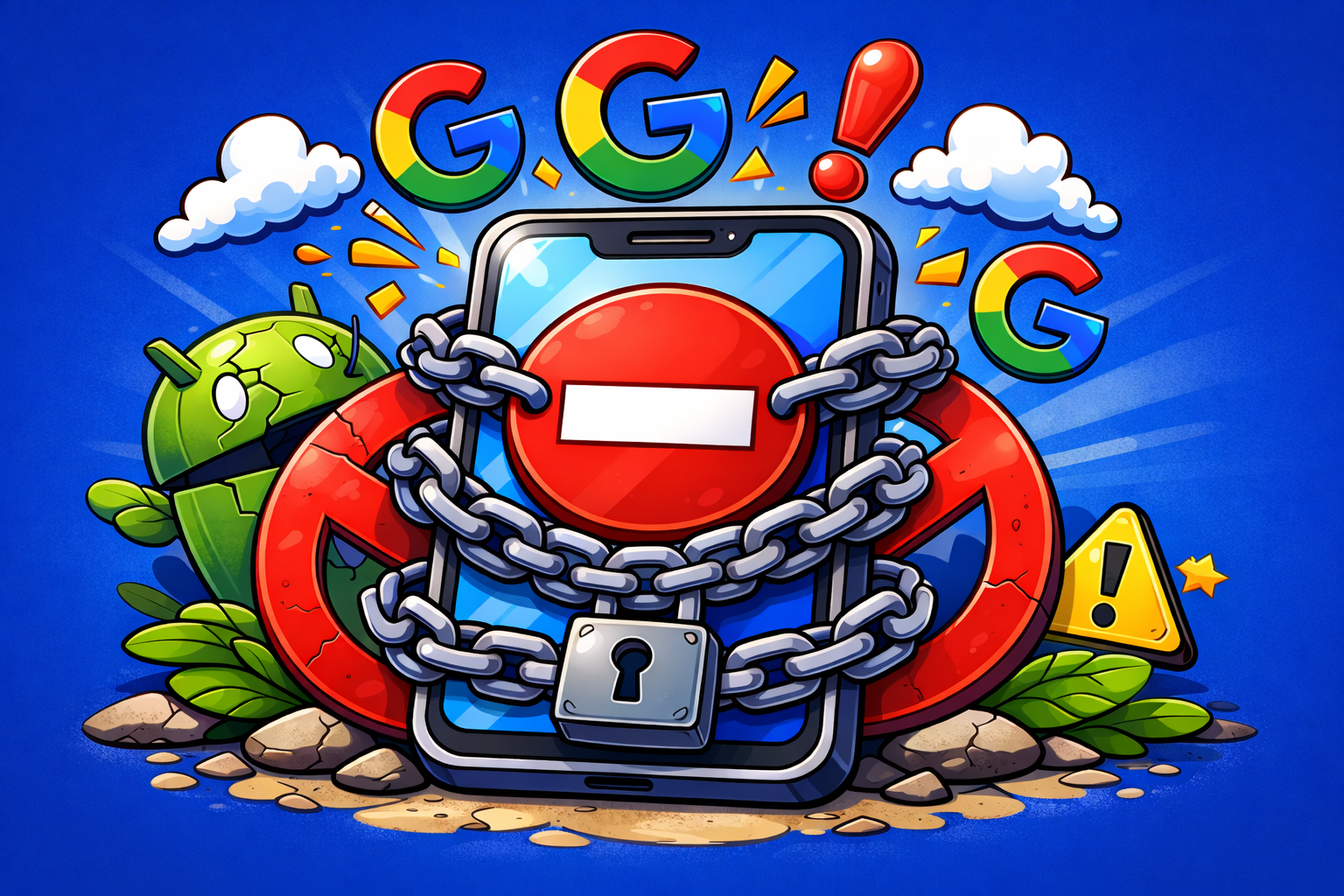
Since time began, Android has been the king of mobile openness. It was a platform where users could easily install apps from outside the official store of the platform, and developers could freely distribute their apps without having to go through big tech companies. However, some big policy changes are on the way that will forever change the operating system's behavior. These new changes for Android developers will limit sideloading, negatively affect open-source apps, and cause major privacy issues for both developers and regular users.
If you're a privacy-loving customer or a tech-savvy user who values digital freedom, these restrictions will drastically alter what you can and cant do with your own device. So, here's all you should know about the new policies and their implications for the platform,
Understanding the New Android Developer Changes
In September 2026, Google will start rolling out a mandatory developer verification requirement on certified Android devices. This launch will be region-based: the first enforcement will take place only in Brazil, Indonesia, Singapore, and Thailand.
Google has said that they plan a worldwide rollout for these changes in 2027.
This is not a directive just for apps that get listed on official stores. This rule concerns all applications one tries to install on any Android smartphone or tablet, including sideloaded apps and ones from third-party stores.
According to this new framework, developers will be required to register officially and disclose personal and financial details in order for their apps to be installable by users. The verification process demands that developers supply:
- The developers legal name, physical address, email address, and phone number
- In many cases, an official government-issued ID document (varies from one country to another)
- A $25 one-time registration fee along with a digital payment profile
- Full app package names and digital signing keys
Google has also unveiled a "Limited Distribution" category for students and hobbyists with fewer requirements and no ID verification, but this permits distribution to only a small number of registered devices, not the general public which isn't enough for most larger developers.
Google's Power to Block Apps
Probably the most worrying part of this policy is the amount of power it gives to Google. By forcing developers to sign up through a single system, Google technically can at any time decide to unverify a certain developer.
If a developer is against Google's terms or if their account be restricted, then every time an app from those developers is blocked from installation on the user's device. Which means that even if you get an app directly from a reliable, independent developer's web site, Google still has a lot of power in deciding whether your phone can run it.
Alternative open source app stores such as F-Droid have pointed out that there are risks of arbitrary enforcement and account termination.
Why is Google doing this?
Google claims that apps installed from sideloading sources currently bear over 50 times more malware than those downloaded from the Play Store. So Google really thinks of this verification system like an "ID check at the airport" which helps to cut down on the malware issue from unknown sources. Keep in mind that there are also times when malware shows up on the Google Play.
It's up to you if you think that excuse is convincing or not.
The Impact on Sideloading and Open Source Apps
Sideloading refers to installing an app directly on your device without using a centralized app store such as Google Play if on Android or App Store if on iOS. The new regulations will result in apps from unverified developers being unable to install on certified Android devices in certain regions and worldwide in 2027.
This is a major disaster for open-source software, which thrives on the ability to distribute outside of corporate ecosystems. The verification requirement will pose a serious obstacle even to casual developers and will kill the idea of private/anonymous mass app distribution on popular devices.
Besides, many open-source developers make great tools but want to stay anonymous for personal safety or privacy reasons.
The new regulation leaves these developers with two choices: reveal their government-issued identity or have their apps denied on millions of consumer devices.
Important Exceptions
Sideloading isn't entirely ruined. Google has announced some bypasses that require more effort from the user:
- "Experienced Users" Flow: After the Android community expressed their displeasure, Google disclosed that they are making an "advanced flow" which is intended for power users who want to be able to install apps from unverified developers after they accept that they will be given high-friction warnings. But, critics including F-Droid hold that this feature might not be available when enforcement starts in September 2026.
- Non-Certified Devices: Custom ROMs and non-certified Android builds (such as GrapheneOS) are unaffected.
The Privacy Concerns
For those who care for digital privacy, these changes bring up serious issues.
Making it mandatory for all developers to register under their personal information such as full name, email address, phone number, home address, and potentially ID verification means that there will be a centralized record of Android app software developers.
Google declares that developer information is handled according to their global Privacy Policy, but they have not made available detailed, program-specific rules on retention periods, data minimization, or government data-sharing procedures. Let's be honest here, Google isn't renowned for protecting privacy.
The policy also discourages the creation of privacy-preserving applications. Developers being forced to reveal their real-life identities to their projects will affect developers of highly sensitive tools such as secure communication apps, anti-censorship software, or human rights tools. The policy will heavily impact those who are making apps that aim at protecting the most vulnerable people or at challenging the actions of authoritarian regimes.
Is Android Becoming like iOS?
This change actually brings Android closer to iOS in one big way: both platforms will end up having centralized and identity-verified developer registries with the authority to block distribution.
However, there are still meaningful differences between the two. The most significant is that outside of the European Union, iOS does not allow sideloading at all. Apple's strict walled garden approach has historically meant fewer choices for users. In contrast, Android currently boasts a much larger quantity of app developers specifically because of the platform's openness and the freedom to distribute software anywhere and without paying any development licenses or payment fees to the appropriate appstores.
But, there are still significant differences:
- Google argues that sideloading and alternative stores will still be allowed in principle; the limitation is that developers need to be verified, not that alternative app stores or sideloading cannot exist.
- The ADB exemption along with the forthcoming "experienced users" flow offer ways that don't exist on iOS. Non-certified ROMs remain completely outside the system.
Nonetheless, for a regular user who does not want to bother with ADB commands or flashing custom firmware, the actual experience will seem much more limited.
Is there an Alternative? Consider GrapheneOS
GrapheneOS is a Pixel only Android based mobile operating system oriented towards privacy and security that largely disconnect you from Google's tracking mechanisms at the OS level.
In fact, since GrapheneOS is not a "certified" Android device equipped with Google Play services, it means that you will not be subjected to these new Google verification requirements.
Here is what you achieve by installing GrapheneOS on your device:
- You notably enhance your privacy, and security, especially if you are also making cautious app choices.
- Once these changes are implemented, you will still be free to install any software you want without resorting to Googles permission like you used to be able to.
- You may optionally benefit from the Google Play services that are sandboxed and do not require system-level privileges, completely different from stock Android.
GrapheneOS is essentially a lifeline for those users who cherish side loading after these changes, along with far more privacy and security over stock android.
What This Means for You
If you only use Play Store apps, not much will change for you. Google already mandated the developers on Play to verify their identities starting from 2023, so the majority of popular apps have been compliant for some time. If you are the type of person to get your apps via F-Droid, GitHub, or other less popular ways by September of 2026 in the first four countries (and later elsewhere), you should anticipate that it might get impossible install some of the open-source apps on stock Android if their developers refuse to get verified. As these deadlines get closer, it would be wise for users to keep up-to-date with these restrictions and consider alternative operating systems. The battle for open software, freedom in sideloading, and digital privacy is in danger more than ever.
If you would like to fight back against this new Google policy, checkout keepandroidopen.org.
Return to knowledgebaseAbout the author
SMSPool Admin
The owner of SMSPool.net, a site that originally started as a hobby but saw rapid expansion due to the high demand, loves anything technology related and loves writing about technology related articles.
www.smspool.netOther interesting articles
How to change your SMSPool Password
Step-by-step tutorial on changing your SMSPool password.
- By Admin
- December 27, 2025
How to get a Truth Social SMS verification
This guide shows you how to create a Truth Social account with our Truth Social SMS verification service.
- By Admin
- April 22, 2024
How to log out of your SMSPool Account
Step-by-step guide on how to log out of your SMSPool Account
- By Admin
- January 16, 2026
Register User Interviews without a number
Step-by-step guide to registering on User Interviews with a virtual phone number. Securely complete SMS verification without sharing your personal phone number.
- By Admin
- February 1, 2026
How to Pass Vinted SMS Verification
Find out if Vinted requires a phone number for buying or selling. This guide explains the verification rules, why free virtual numbers fail, and how to verify.
- By Admin
- February 19, 2026
Why we strongly advise against Free VPNs
Free VPNs promise privacy but often sell your data, use your device as a proxy, and cause SMS verifications to fail. Learn why SMSPool warns against them.
- By Admin
- April 3, 2026
Login with SMSPool Account Number
Step-by-step guide on how to login to SMSPool with your generated account number.
- By Admin
- January 19, 2026